What to expect
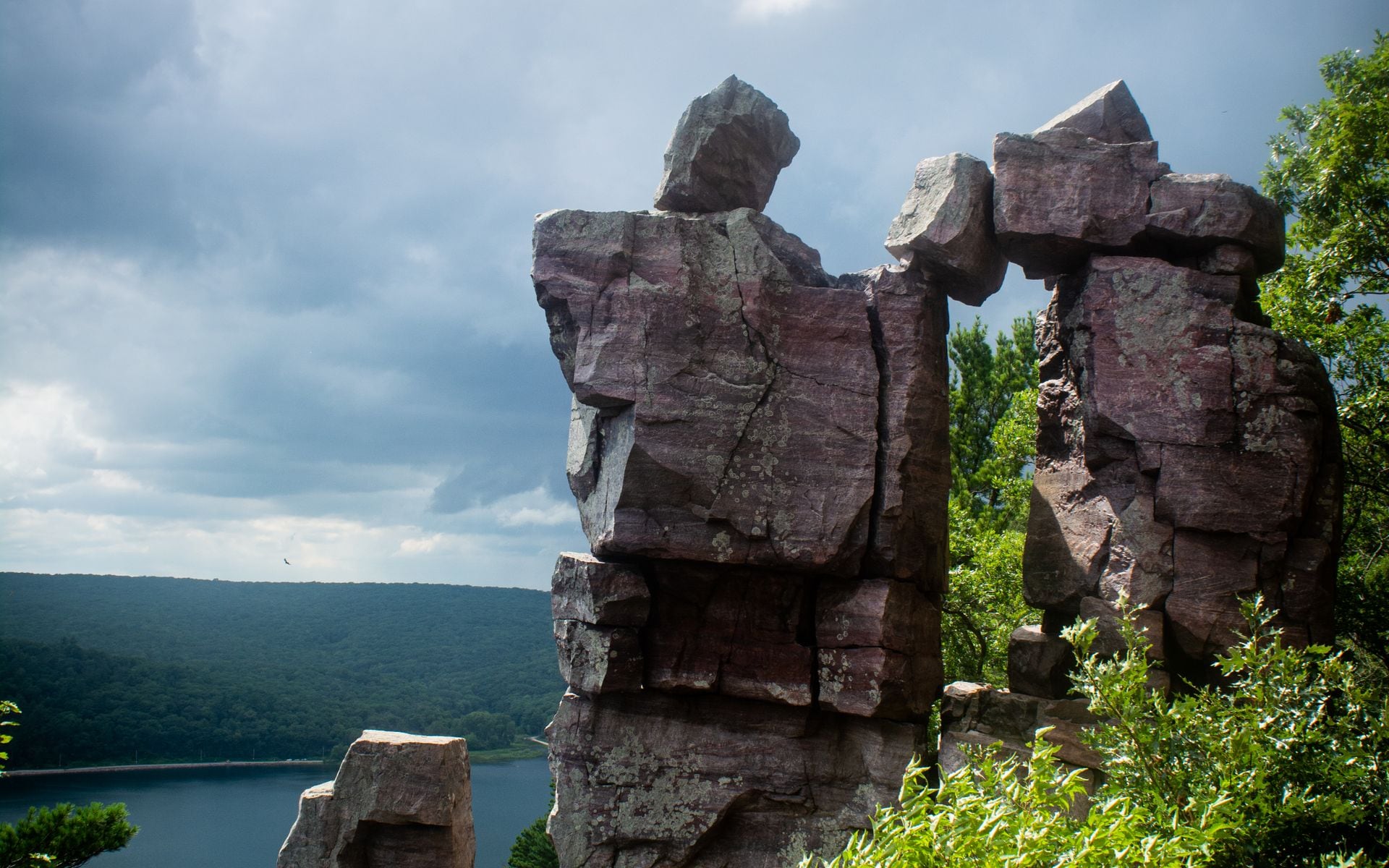
Devil's Lake State Park covers more than 11,000 acres in the heart of the Baraboo Range, an ancient ridge of quartzite that predates most American mountain ranges by hundreds of millions of years. The lake itself sits in a gorge carved not by the last glacier but by the weight of glacial ice that dammed ancient drainage and left a basin of cold, clear water roughly 40 to 50 feet deep at its center. The bluffs on both the north and south shores rise about 500 feet above the water and are covered in talus slopes, old-growth cedar, and exposed quartzite faces that range from pale pink to deep reddish-purple depending on the light and the time of day.
The park draws more than three million visitors a year, making it Wisconsin's busiest state park by a large margin. That matters for your planning. Parking lots on both the north and south shore fill by 9 a.m. on summer weekends, and once they close the gates, there's no good workaround. Arrive before 8 a.m. in July and August and you'll have the trails largely to yourself. The Civilian Conservation Corps built most of the stone staircases, walls, and shelters you'll see along the bluff trails in the 1930s. The craftsmanship holds up. That stonework gives the park a built character that goes beyond cleared paths and pavement, something that rewards a slower pace once you're up on the ridge. Part of what makes Devil's Lake worth returning to is how different the same trail feels in different seasons, and how much of the Baraboo Hills landscape you start to read once you've been here a few times. The park is also a certified segment of the Ice Age Trail, the 1,200-mile route that traces the edge of the last glacial advance through Wisconsin.
What to do there
Hiking is the main event, and the park has about 29 miles of trails covering both bluffs and the lakeshore. The East Bluff Trail is the one most people come for: a roughly 2-mile ridge walk with multiple overlooks, accessible from the south shore parking area via the steep CCC staircase that gains about 400 feet in half a mile. If you want a more gradual approach to the same ridge, the East Bluff Woods Trail reaches it from the east end with less sustained climbing. The West Bluff Trail (about 1.5 miles) is quieter and offers views across the lake to the East Bluff. Balanced Rock, a rounded quartzite boulder balanced on a narrow base, sits about a mile up the East Bluff trail and is the landmark most first-time visitors aim for. The Tumbled Rocks Trail loops along the south shore lakeshore through a boulder field for about 1.2 miles and stays mostly flat, which makes it the right choice for younger kids or anyone who wants to see the bluffs up close without the elevation gain.
Rock climbers have worked the quartzite faces on both bluffs for decades. The park has close to 2,000 identified routes across difficulty levels, concentrated on the south shore talus around Breezy Point and on the north shore faces near the parking area. Wisconsin's DNR asks that climbers register at the park office and stay on established routes to protect the peregrine falcons that returned to nest on the bluffs in the 1990s after a long absence. Two swimming beaches, one on the north shore and one on the south, are staffed with lifeguards from Memorial Day through Labor Day. The lake stays cool even in summer, typically running in the mid-60s°F in July, which is refreshing on a hot day but can be a shock if you're not expecting it. No motorized boats are allowed on the lake, but stand-up paddleboards and kayaks are welcome. A concession near the south shore rents them in summer for around $15 to $20 per hour (estimated).
Getting there and access
The park entrance is on County Road DL, about 3 miles south of Baraboo and a quick turn off US-12. From Madison, it's about 55 miles northwest via US-12, which takes just over an hour. From Milwaukee, plan on roughly 2 hours via I-94 west and then US-12 north. From Chicago's northern suburbs, count on 2.5 to 3 hours. Wisconsin Dells is about 15 minutes north on US-12, which makes Devil's Lake a natural add-on to any Dells trip, or the anchor of a separate day if waterparks aren't the draw. The closest commercial airports are Dane County Regional in Madison (MSN) and General Mitchell International in Milwaukee (MKE).
A vehicle admission sticker is required to enter the park. Daily passes run approximately $8 for Wisconsin residents and $11 for non-residents (confirm current rates at the park entrance or the Wisconsin DNR website before you go). Annual Wisconsin State Park stickers are worth the cost if you plan to visit more than two or three times in a year. Parking is split between the South Shore lot off County Road DL and the North Shore lot off Park Road. The South Shore lot, closer to the East Bluff trailhead, fills fastest. On busy summer weekends, both may be full before 10 a.m. The Wisconsin Dells & Central Wisconsin region has more context on what to combine with a Devil's Lake visit.
Best time to go
June through August is peak season, with the swimming beaches open and the highest trail traffic. Weekday visits in June and August are significantly quieter than any weekend in July. If a summer weekend is your only option, Friday afternoon arrivals are easier than Saturday morning. September and early October bring fall color to the bluffs: the oaks and maples along the ridgeline typically turn in the third week of September through the second week of October, with peak color usually around the first weekend of October in most years. This window is arguably the best combination of conditions at the park. The beaches are closed, so parking pressure drops, but the trails are still comfortable and the light on the quartzite is sharper in the low autumn sun.
The park stays open year-round, and winter hiking in the Baraboo Hills is genuinely good when snow covers the talus slopes and the bluffs are empty. The CCC staircases can be icy from December through February, so microspikes or traction devices are worth packing. Spring (late March through May) brings snowmelt, muddy trails, and the first wildflowers on the bluff tops, and the lake can be glassy and cold in a way that makes the early-season hike feel earned. See the full rundown of Wisconsin's top parks on our Best State Parks in Wisconsin page.
Good to know
Camping is available inside the park, with both electric hookup sites and primitive walk-in options. The campground books out for summer weekends months in advance through the Wisconsin DNR reservation system. If you want a July site, start checking availability in March or early April. Most day visitors base themselves in Wisconsin Dells or Baraboo. In Wisconsin Dells, the Wilderness Resort and Glacier Canyon Lodge offer waterpark amenities about 15 minutes north, which works well for families splitting their time between the lake and the slides. Baraboo itself has smaller motels and several bed-and-breakfast options at lower price points, and it puts you closer to the park entrance.
For a meal after your hike, Ishnala Supper Club on Mirror Lake in Lake Delton, about 12 miles north on US-12, has been doing Friday fish fries and steaks with a view over the water since 1953. It's one of the most atmospheric supper clubs in the Dells corridor, and a good reason to time your park visit so you finish the trail by late afternoon. If you'd rather something more casual, Moosejaw Pizza & Dells Brewing Co. in Wisconsin Dells serves wood-fired pizza and house-brewed beer and handles the post-hike crowd well. Dogs are allowed on most hiking trails on a 6-foot leash but are not permitted on the swimming beaches or in beach areas. The exposed quartzite surface on the bluff trails can get hot in summer, so check your dog's paw comfort before heading up.
Frequently asked questions
Do I need a reservation to visit Devil's Lake State Park?
You don't need a reservation for day use, but you do need a vehicle admission sticker, approximately $8 per day for Wisconsin residents and $11 for non-residents. Parking lots fill early on summer weekends, sometimes before 9 a.m., and the park may turn vehicles away once lots are full. For camping, reservations are required through the Wisconsin DNR system and book out months in advance for summer weekends.
How hard is the East Bluff hike at Devil's Lake?
The CCC staircase from the south shore parking area gains roughly 400 feet in about half a mile, which is steep and can feel demanding in warm weather. The stone steps are solid but uneven in places. Most moderately fit hikers complete the climb in 20 to 30 minutes. If you want a more gradual approach to the same ridge, the East Bluff Woods Trail from the east end is longer but less steep. The ridge walk itself is mostly flat once you're up.
Can you swim at Devil's Lake State Park?
Yes. Both the north shore and south shore have sandy swimming beaches staffed with lifeguards from Memorial Day through Labor Day. The lake stays cool, typically in the mid-60s°F even in July, and no motorized boats are permitted, so the water is calm. Paddleboards and kayaks are allowed and available to rent near the south shore. Dogs are not permitted in the beach areas.
How close is Devil's Lake State Park to Wisconsin Dells?
The park entrance is about 15 minutes south of Wisconsin Dells via US-12, and about 3 miles south of Baraboo. The two make a natural combination for a day or a long weekend: hike the bluffs and swim in the morning, then head north to the Dells for an evening at one of the waterpark resorts.