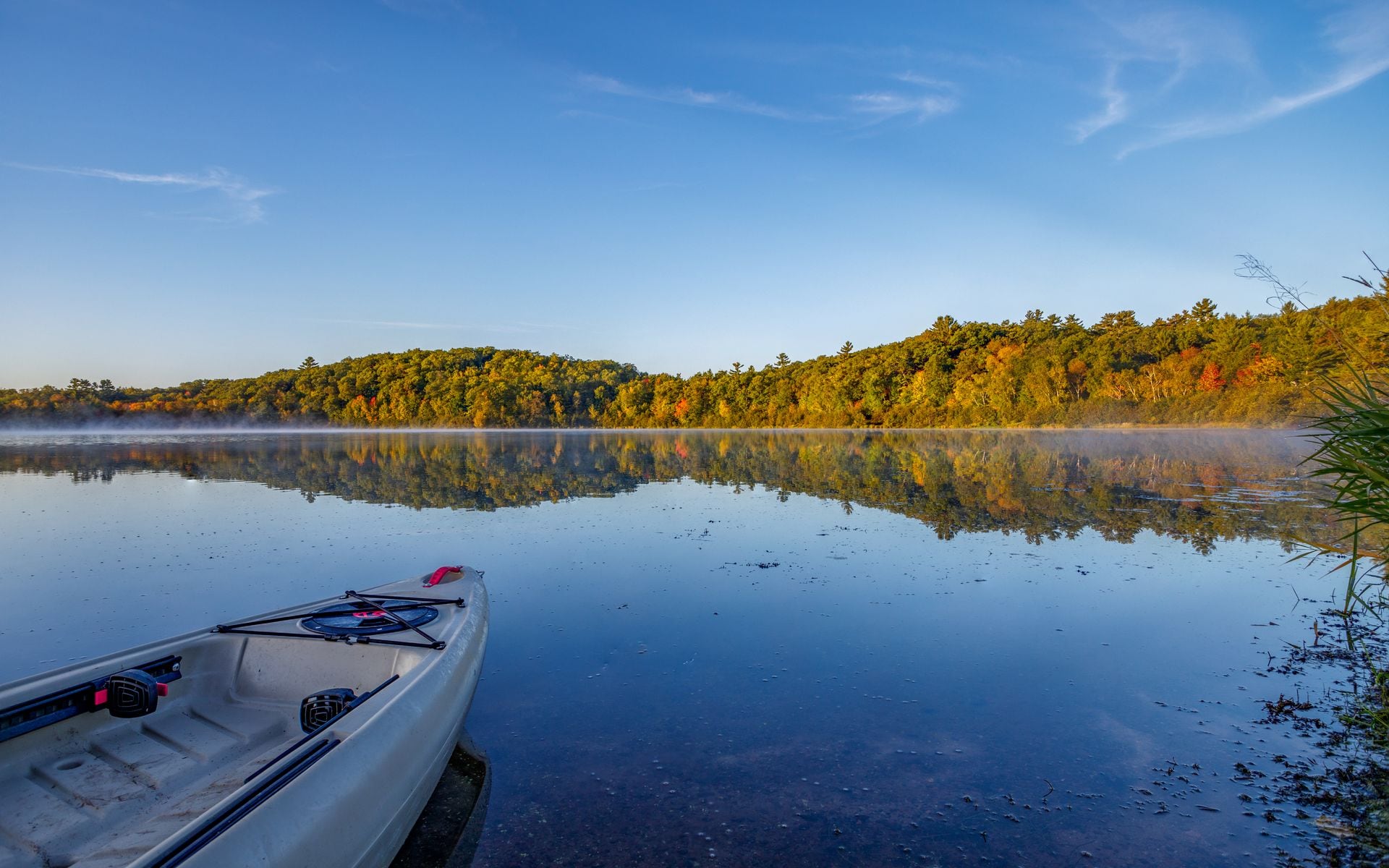
Wisconsin's Lake and Beach Scene
The Wisconsin Travel Guide covers a state built around water. Roughly 15,000 named lakes spread from the Mississippi bluffs in the southwest to the pine-rimmed Northwoods around Minocqua and Hayward, while Lake Michigan runs the full eastern edge and Lake Superior holds the far north. That range means very different experiences depending on where you land. A weekend at Geneva Lake in southeastern Wisconsin looks nothing like a kayak trip to the Apostle Islands off Bayfield, and the warm, shallower Green Bay side of Door County swims completely differently than the cold, open-lake side.
The two Great Lakes frame the state and deserve some advance preparation before you arrive. Lake Michigan borders Wisconsin for roughly 400 miles from Kenosha north through Sheboygan, Two Rivers, Kewaunee, and up the Door Peninsula to the tip at Northport. Bradford Beach on Milwaukee's lakefront is the most-visited city beach in the state, with a color-coded swim risk flag system that signals rip current conditions before you wade in. Kohler-Andrae State Park in Sheboygan, about 60 miles north of Milwaukee, sits on sand dunes that climb above 40 feet and sees far less traffic than Door County for comparable Lake Michigan scenery. Lake Superior, up on the Bayfield Peninsula, stays cold year-round and delivers a completely different character, with the sandstone sea cave shoreline of the Apostle Islands National Lakeshore the main draw.
Beaches and Swimming Spots by Region
Door County divides between two shores, and knowing the difference before you go saves real frustration. The Lake Michigan side, where Whitefish Dunes State Park holds the tallest dunes on Lake Michigan at 93 feet, delivers dramatic scenery and cold water that often runs 55 to 65 degrees Fahrenheit even in August. The Green Bay side, where Nicolet Bay Beach at Peninsula State Park near Fish Creek offers a long sandy swimming beach, runs significantly warmer and is where most local families swim. The Door County Weekend itinerary covers both shores and can help you route a trip that includes beach time on the right side. Washington Island, reached by a 30-minute ferry from the tip of the peninsula at Northport, adds another option with Sand Bay Beach on the island's north side.
Madison sits on an isthmus between Lake Mendota and Lake Monona, and both lakes are accessible from the city without a car. Brittingham Boats, at Brittingham Park on Lake Monona's west shore, rents single kayaks, double kayaks, canoes, and paddleboards by the hour. They also run seasonal events including Full Moon Paddles, which let you get out on the water after dark with soft lighting and live music on nearby pontoons. It is one of the more specific ways to spend a summer evening in Madison. Green Lake, about 90 minutes north of Madison near the town of Green Lake, is Wisconsin's deepest natural lake at 237 feet and one of the clearest, popular with scuba divers and sailboaters.
Geneva Lake in the southeast draws the resort crowd and has for more than a century. The Lake Geneva Cruise Line runs two-hour narrated tours from the Riviera Docks in downtown Lake Geneva, circling the full 21-mile shoreline past Gilded Age mansions and giving you a read on the lake's history without renting your own boat. Tours typically depart several times daily in summer. Lake Lawn Resort sits on Delavan Lake, about seven miles west of Lake Geneva, and gives guests direct beach and dock access on a quieter lake. The Northwoods lakes around Minocqua, Eagle River, Boulder Junction, and Hayward are cabin country, with clear tannin-tinted water that reads brown from above but is clean and swimmable, plus the Chain O'Lakes system near Eagle River connecting 28 lakes by navigable water.
When the Water Is Right
Swimming season runs from late June through late August. Lake Michigan surface temperatures near shore typically reach 68 to 72 degrees Fahrenheit in mid-July through mid-August during a warm summer, though a stretch of north winds can push the warm surface water offshore and drop temps to the 50s overnight. Inland lakes warm faster. Most Northwoods and central Wisconsin lakes hit comfortable swimming temperatures by early July, and Green Lake and Geneva Lake can swim well by late June in a good year. Lake Superior stays coldest, rarely climbing above 60 degrees even at the peak of summer, so the Apostle Islands area is better for kayaking and sea cave exploration than for open-water swimming. After Labor Day, crowds thin across the board and Northwoods lakes in late September offer a quiet, fall-color backdrop with few boats on the water. That window between Labor Day and mid-October is the insider pick for anyone who wants the scenery without the July crowds. Before you head for a Friday fish fry and an afternoon at the beach, check the swim advisories for your specific beach, particularly on Lake Michigan.
Typical Costs (Estimates)
Wisconsin state park beaches require a vehicle admission sticker: $10 per day or $36 for an annual pass, valid at Peninsula, Whitefish Dunes, Kohler-Andrae, Devil's Lake, and every other state park with a beach or boat launch. Kayak and paddleboard rentals at places like Brittingham Boats in Madison typically run $20 to $35 per hour for a single kayak and $30 to $50 for a double, with canoes in a similar range. The Lake Geneva Cruise Line charges roughly $30 to $55 per adult depending on tour length and route. Guided sea kayak tours from Apostle Islands Sea Kayaking, run by Lost Creek Adventures out of Cornucopia near the Bayfield Peninsula, range from around $80 to $160 per person for half-day and full-day paddles, which includes all gear, a certified guide, and access to the sandstone sea caves along the mainland shore at Meyers Beach. Lakefront resort stays, like Blue Harbor Resort in Sheboygan on Lake Michigan or Lake Lawn Resort on Delavan Lake, run $150 to $350 or more per night in summer depending on room type and how close you book to peak weekends in July and August.
Planning and Booking
State park beaches don't require reservations for day use, but parking is the real constraint. Peninsula State Park near Fish Creek, Devil's Lake near Baraboo, and Whitefish Dunes in Claybanks Township routinely fill their lots before noon on summer weekends, sometimes by 10 a.m. on the busiest July days. Arriving before 9 a.m. or picking a weekday makes a significant difference. Boat rentals and guided kayak tours at the Apostle Islands and in Door County book out weeks ahead during July and August, so planning three to four weeks out is not overly cautious. The Lake Geneva Cruise Line keeps a predictable daily schedule and often has walk-up availability on weekday mornings, though Fourth of July weekend and peak summer Saturdays fill up. If you're combining a beach trip with an evening out, the Best Supper Clubs in Wisconsin page lists options near the main lake regions across the state. And if you want something to sip while you plan, Wisconsin's breweries and distilleries are spread across every region, with solid craft beer scenes right in Door County, Madison, Milwaukee, and the Lake Geneva area.
Frequently asked questions
Are Wisconsin's Great Lakes beaches safe for swimming?
Most are, with some conditions to watch. Lake Michigan and Lake Superior can generate dangerous rip currents, and both lakes run significantly colder than inland lakes even in summer. Bradford Beach in Milwaukee uses a color-coded swim risk flag system updated daily, and many Lake Michigan municipal beaches post similar advisories. The Green Bay side of the Door Peninsula is calmer and warmer than the open Lake Michigan side. Always check local swim advisories before going in, swim near a lifeguarded area when one is available, and never swim alone at Great Lakes beaches.
What is the water temperature at Wisconsin's beaches in summer?
It varies considerably by water body. Lake Michigan near shore typically runs 55 to 65 degrees Fahrenheit in June, warming to 68 to 72 degrees in mid-July through mid-August in a good summer, with the possibility of sudden drops when north winds push the warm surface layer offshore. Lake Superior stays coldest, rarely reaching 60 degrees even in August. The Green Bay side of Door County warms faster than open Lake Michigan. Wisconsin's inland lakes generally warm fastest, reaching comfortable swimming temperatures of 70 to 78 degrees in most Northwoods and central Wisconsin lakes by mid-July.
Which part of Wisconsin has the best lake beaches?
It depends on what you're after. Nicolet Bay Beach at Peninsula State Park near Fish Creek on the Green Bay side of Door County is the most popular family swimming beach in the state, with warm, protected water. Whitefish Dunes State Park on the Lake Michigan side of Door County has the most dramatic dunes and scenery but much colder water. Milwaukee's Bradford Beach is the easiest big-city beach. Geneva Lake in the southeast is the resort-and-cruise pick. For remote Great Lakes shoreline without crowds, the Apostle Islands area near Bayfield is the most distinctive experience in Wisconsin.
Do you need a reservation to use a Wisconsin state park beach?
No reservation is needed for day-use beach access, but parking fills fast at the most popular parks. Peninsula State Park near Fish Creek, Devil's Lake near Baraboo, and Whitefish Dunes State Park routinely fill their parking areas by late morning on summer weekends. A daily vehicle admission sticker ($10) or annual sticker ($36) is required. Arriving before 9 a.m. on summer weekends or planning a weekday visit is the practical workaround at the busiest parks.