How We Picked
Wisconsin manages 66 state parks, forests, and recreation areas. All require a vehicle admission sticker, which costs $28 per year for Wisconsin residents and $38 for non-residents. Daily passes run $8 for residents and $11 for non-residents, so an annual sticker pays for itself on any trip where you hit more than three parks. We chose parks based on what you can only get there: a specific bluff view, a waterfall, a dark sky designation, a stretch of wild shoreline that draws people back year after year. For lodging near the parks below, the hotels and resorts directory covers options statewide, from Wilderness Resort in the Wisconsin Dells corridor for quick Devil's Lake access to Grand Geneva Resort & Spa near Lake Geneva for southern state forest trips. Check the Wisconsin Travel Guide for regional context on where each park fits into a longer itinerary.
Devil's Lake State Park
Devil's Lake is the most visited state park in Wisconsin, drawing more than 3 million people a year, and it earns that traffic. A spring-fed lake sits in a glacial gap in the Baraboo Range, hemmed in on two sides by 500-foot quartzite bluffs that predate the Ice Age by hundreds of millions of years. The East Bluff Trail climbs through CCC-built stonework from the 1930s, passing Balanced Rock before reaching a ridgeline view 500 feet directly above the water. The West Bluff Trail covers similar ground from the opposite shore. Two sandy swimming beaches bookend the lake at the north and south ends; water temperatures hit around 75°F by late July, warm for a spring-fed lake this size.
The park sits on US-12, about 15 minutes south of Wisconsin Dells and 90 minutes northwest of Milwaukee. Parking lots fill before 9 a.m. on July and August weekends, so either arrive early or choose a weekday. The park holds 423 campsites and the reservation system opens in January for the following summer; peak weekends go fast. Families combining Devil's Lake with a Dells trip often base themselves at Wilderness Resort in Wisconsin Dells, which is about 15 minutes from the south park entrance.
Peninsula State Park
Peninsula covers 3,776 acres in Fish Creek at the center of Door County, making it the third-largest state park in Wisconsin and one of the most varied. The park has more than 20 miles of trails, an 18-hole golf course that has been running since 1921 (one of the oldest operating courses in Wisconsin), and Eagle Bluff Lighthouse, a red-brick 1868 light that still stands on a rocky point above Green Bay. Guided lighthouse tours run May through October.
Nicolet Beach on the Green Bay side is one of the most accessible swimmable spots on the entire Door Peninsula, with calm water protected from open-lake wave action. Fish Creek's restaurants, bike rentals, and shops are five minutes from the south park entrance. The cluster of small towns along the bayshore, including Ephraim and Sister Bay, are within a 15-minute drive for dinner or supplies. Campsite reservations open in January; July and August weekends fill within hours of the booking window opening, so mark your calendar.
Newport State Park
Newport is the only designated wilderness state park in Wisconsin. There are no electrical hookups, no car camping, and no developed sites with a picnic table a few feet from your neighbor. You hike or bike in to one of 16 primitive campsites along the Lake Michigan shoreline on the far tip of the Door Peninsula, about 12 miles northeast of Ellison Bay. The lake stays cold through most of the season and is not a reliable swimming spot, but the cobble-and-sand shoreline makes a good long walk.
The park carries a certified International Dark Sky Park designation, one of fewer than a dozen in the Midwest. Nights without a moon in September and October are dark enough to see the Milky Way clearly over the open lake. The beech-maple forest hits peak color by mid-October, and the solitude is real: Newport consistently draws a fraction of the crowds that Peninsula State Park does, even though both parks sit in the same county. If you want the Door Peninsula without the summer weekend pressure, this is the park to choose.
Kohler-Andrae State Park
Kohler-Andrae covers two miles of Lake Michigan shoreline in Sheboygan, about an hour north of Milwaukee. The park has a wide, sandy beach with low frontal dunes, a 2.5-mile Dunes Cordwalk through a protected coastal dune ecosystem (one of the few remaining examples on the Wisconsin side of Lake Michigan), and a campground sitting right behind the dunes. Water temperatures stay cool, hitting around 65°F by late August, but on calm summer days swimmers come anyway.
For a broader look at Wisconsin's lakeshores and swimming spots, the best beaches guide covers options from the Sheboygan shoreline all the way north to the Apostle Islands. But if you want a Lake Michigan beach day without the drive to Door County, Kohler-Andrae is the cleanest answer on the southeastern shore. Blue Harbor Resort in Sheboygan, about 10 minutes north of the park, is the closest full-service option if you want resort amenities alongside the beach.
Pattison State Park
Pattison sits a few miles south of Superior in the far northwest corner of the state, roughly five hours from Milwaukee and four from Green Bay. The reason to make the drive is Big Manitou Falls: at 165 feet, it is the tallest waterfall in Wisconsin and the fourth tallest east of the Rocky Mountains, dropping in two tiers into a basalt canyon on the Black River. A second waterfall, Little Manitou Falls, sits about a mile upstream and adds a shorter second plunge worth the extra walk.
A swimming beach on Interfalls Lake sits between the two falls, and the trail network is compact enough to cover in a half-day. If you are already heading north toward the Apostle Islands or Bayfield, Pattison is right on the US-2 corridor and makes a natural stop before Ashland.
Wyalusing State Park
Wyalusing sits on bluffs where the Wisconsin River empties into the Mississippi, about 45 miles north of Prairie du Chien on US-18 and roughly 3.5 hours from Milwaukee. The park rises 500 feet above the confluence on the Wisconsin side. The Point Lookout Trail reaches the main overlook, where both river channels spread out below and the Iowa bluffs rise across the water on a clear day.
In May, the ravine floors fill with trillium and wild ginger before the forest canopy closes in for summer. A canoe trail threads through the Mississippi River backwaters below the bluffs, and a 30-site canoe camp, accessible only by paddling in, adds a genuine backcountry option that few general travel guides mention. This is Great River Road country and fits naturally into any multi-day drive along the Wisconsin side of the Mississippi.
Interstate State Park
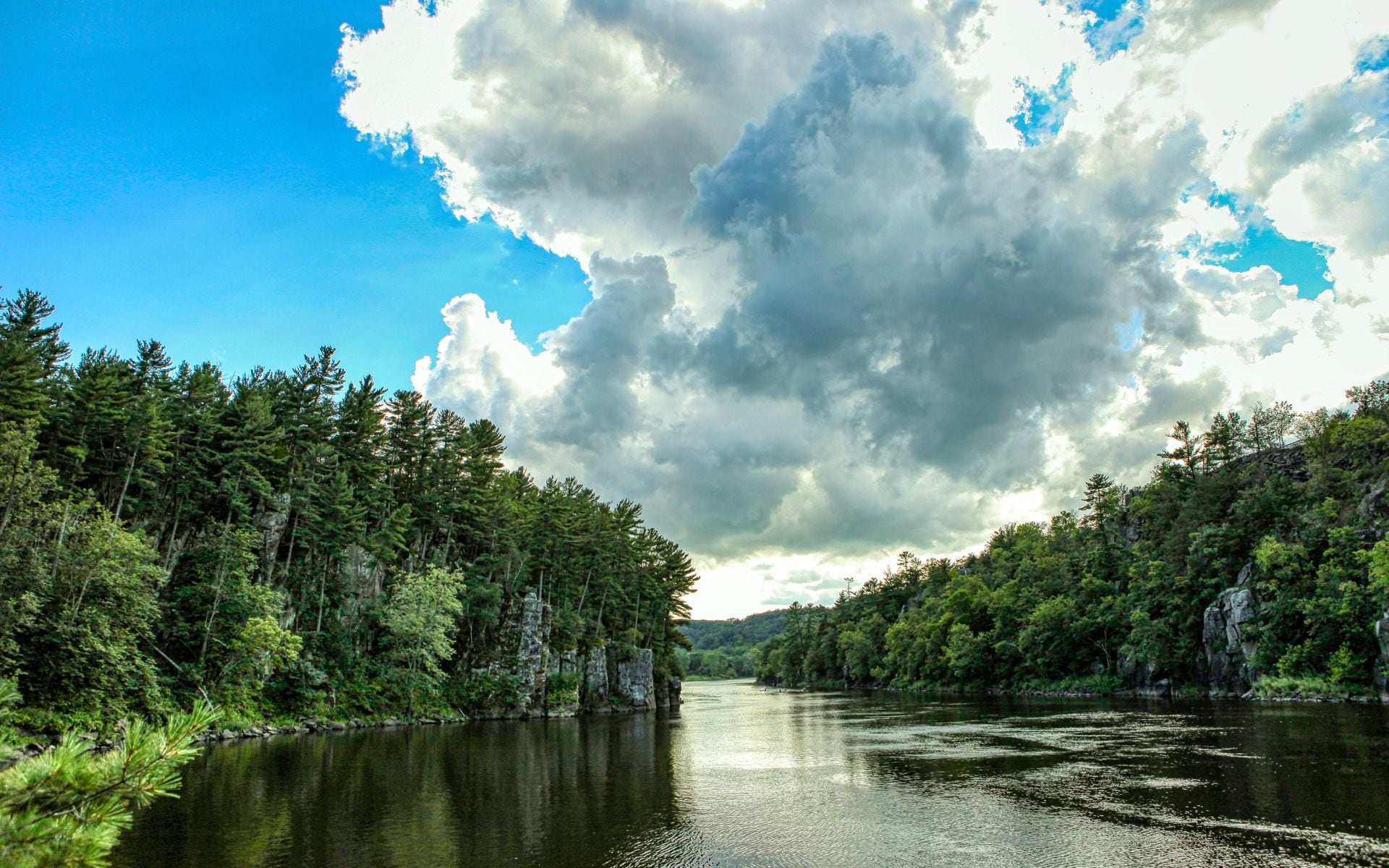
Interstate sits at St. Croix Falls on the Wisconsin-Minnesota border, sharing the Dalles of the St. Croix gorge with an adjacent Minnesota park on the other bank. The Wisconsin section holds more than 200 ancient glacial potholes carved into the basalt canyon walls by Ice Age meltwater, some reaching 25 feet deep. The St. Croix River runs about 200 feet below the main overlook trail, and on a summer weekday the canyon is quieter than you would expect given how close it is to a major metro area.
Kayak launches and canoe rentals are available in and around St. Croix Falls, and the Ice Age National Scenic Trail passes through the park. At about 75 miles east of Minneapolis via US-8, this is one of the most accessible Wisconsin state parks for visitors coming from the Twin Cities.
Copper Falls State Park
Copper Falls is near Mellen in Ashland County, about 30 miles south of Ashland and the Lake Superior shoreline. The Bad River and Tyler Forks converge here and carve two separate waterfalls and a 60-foot-deep basalt gorge through mature northern forest. A 2.5-mile loop trail drops to the gorge floor, crosses a footbridge between the two falls, and climbs back out through hemlock and northern hardwood stands.
The park sits at the edge of the Chequamegon-Nicolet National Forest and works as a half-day stop on the way north to the Apostle Islands. Visitors based in Ashland can cover both Copper Falls and the Apostle Islands mainland sea caves at Meyers Beach in a comfortable two-day stretch.
Quick Comparison
| Park | Region | Best For | Best Season | Crowds |
|---|---|---|---|---|
| Devil's Lake | South-Central | Hiking, bluff views, swimming | May–Sep | Very high |
| Peninsula | Door County | Biking, lighthouse, beach | Jun–Oct | Very high |
| Newport | Door County | Dark sky, solitude, backpacking | Jul–Oct | Low |
| Kohler-Andrae | Lake Michigan Shore | Beach, coastal dunes | Jun–Sep | Moderate |
| Pattison | Far Northwest | Waterfall viewing, swimming | May–Sep | Low to moderate |
| Wyalusing | Great River Road | River overlooks, canoeing | May–Oct | Low |
| Interstate | Northwest | Glacial potholes, kayaking | May–Sep | Moderate |
| Copper Falls | Far North | Waterfall gorge, forest hike | Jun–Sep | Low |
Frequently asked questions
Do you need a sticker for every Wisconsin state park?
Yes. Every vehicle entering a Wisconsin state park needs a valid admission sticker or a daily receipt. An annual sticker costs $28 for Wisconsin residents and $38 for non-residents. Daily passes run $8 for residents and $11 for non-residents. If you plan to visit three or more parks on a trip, the annual pass pays for itself. You can buy it online through the Wisconsin DNR website or at the park entrance on arrival.
What is the best Wisconsin state park for families with young children?
Devil's Lake is the most complete family option: two sandy swimming beaches, a clear spring-fed lake, short bluff trails with big views, and 423 campsites. Peninsula State Park in Door County is a strong second, with a calm bay beach, bike trails, and a lighthouse tour kids tend to enjoy. Both parks fill their campsites fast in summer, so reserve in January and plan to arrive before 9 a.m. on summer weekends to get a parking spot.
Which Wisconsin state parks fill up fastest, and when should I book?
Devil's Lake and Peninsula State Park fill their campsites the fastest, often within the first day or two after reservations open in January for the following summer. Newport State Park's 16 primitive sites book out quickly for any summer or fall weekend with favorable weather. For day visitors at Devil's Lake, parking can be gone before 9 a.m. on July weekends. The quieter parks on this list, including Wyalusing, Copper Falls, and Pattison, rarely see the same pressure and often have same-week availability.
Can you swim in Wisconsin state parks?
Many parks have designated swim beaches: Devil's Lake has two, Peninsula State Park has Nicolet Beach on the bay, Kohler-Andrae has a Lake Michigan beach, and Pattison has Interfalls Lake between the falls. Lake Michigan runs cold even in peak summer, with water temperatures around 65°F by late August. Devil's Lake's spring-fed water is warmer, reaching about 75°F by late July. Always check for swim flags or posted closures before you get in, especially at Lake Michigan parks where rip currents can develop.