Door County in winter is a different peninsula than the one that fills up with fish boil crowds and cherry-stand traffic every July. The villages shrink back to their year-round selves, the bay goes quiet, and lodging prices drop considerably. If you like having a good state park trail more or less to yourself, this is the season to come. What you give up is obvious: most of the seasonal restaurants close, the Washington Island ferry runs on a reduced schedule, and a cold snap on the bay side in January can be genuinely bitter. What you get in return is the actual shape of a place that most people see only at its most crowded. That’s the trade, and for a certain kind of traveler, it’s a good one.
What Closes and What Stays Open
The short answer: Sturgeon Bay stays open. The smaller villages up the peninsula, from Egg Harbor through Fish Creek and Ephraim to Sister Bay, get much quieter, but they don’t go dark entirely. Some businesses close for January and February, others stay open Thursday through Sunday, and a handful run year-round.
Sturgeon Bay, at the base of the peninsula where Highway 42 and Highway 57 split, is the commercial center and stays fully operational in winter. The Door County Maritime Museum on the waterfront is open year-round, though hours shift seasonally and it closes on major holidays, so check before you go. The Sturgeon Bay ship canal piers, where the 1903 lighthouse stands at the end of the north pier, are accessible for a cold-weather walk any time of year and are especially worth the trip in late winter when ice has built up along the canal walls.
Going north, Fish Creek tends to hold more year-round businesses than the smaller villages. Some inns and bed-and-breakfasts in Fish Creek operate through winter, and a handful of restaurants stay open on reduced hours. Ephraim and Sister Bay are more seasonal. Wilson’s ice cream in Ephraim closes for winter, as do most summer-oriented shops in Sister Bay. Al Johnson’s Swedish Restaurant, the one with the goats on its sod roof, typically closes January through March.
Washington Island, accessible by ferry from Northport at the tip of the peninsula, is a year-round community. The Washington Island Ferry Line reduces its schedule in winter and can be disrupted if ice on the bay becomes severe. If Washington Island is part of your plan, check the ferry’s current winter schedule directly before booking anything around it.
Peninsula State Park in Winter
Peninsula State Park covers 3,776 acres between Fish Creek and Ephraim and is open year-round. In winter, it’s one of the better cross-country skiing destinations in the eastern part of the state, with roughly 20 miles of trails that the Wisconsin DNR grooms when snow conditions allow.
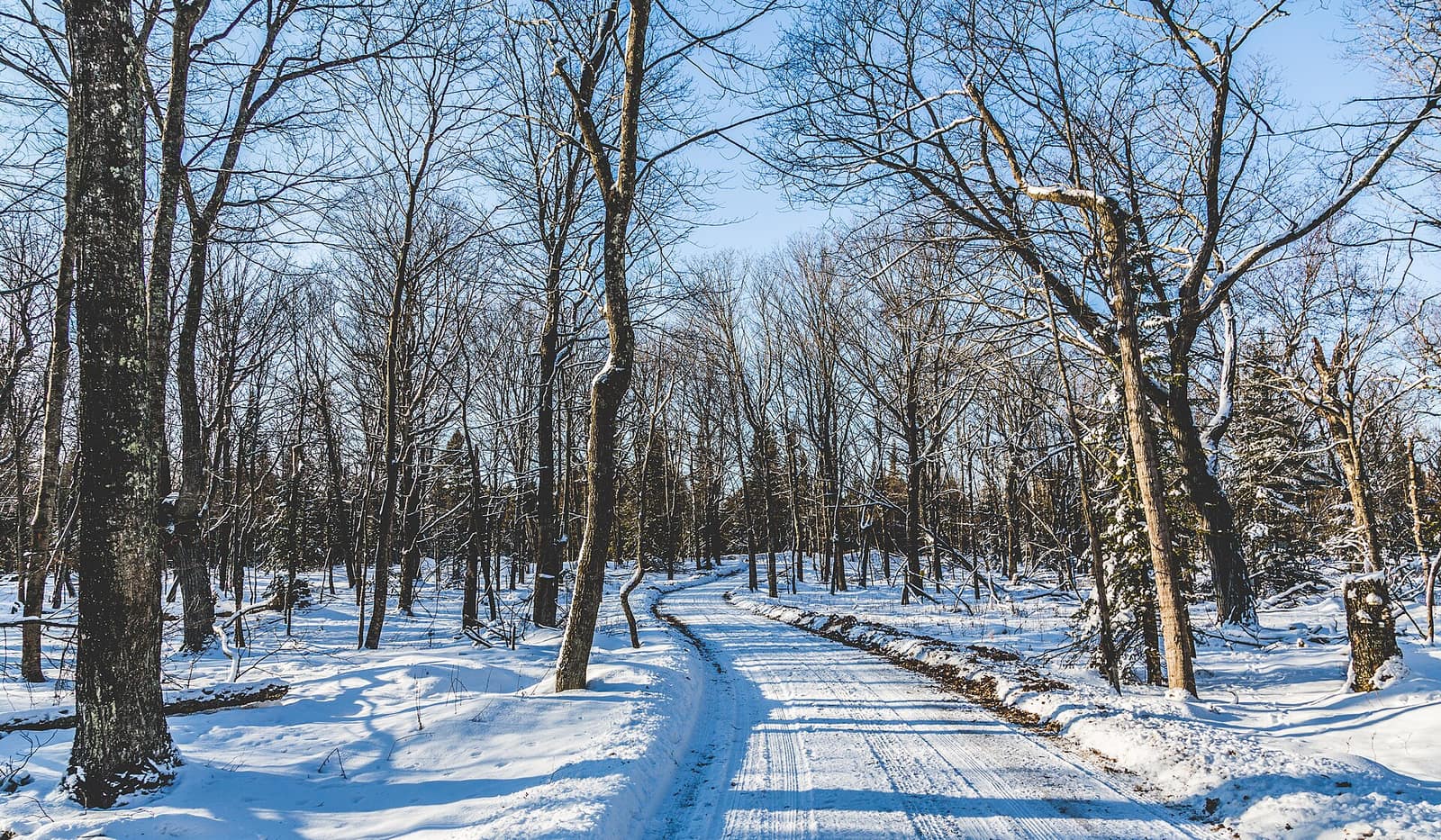
The ski trails run through hardwood forest and across open meadows, and designated sections are shared with snowshoers. When snow is too thin or too icy for grooming, the hiking trails are still accessible on foot in boots. The Sentinel Trail, which traces the bluff with views down over Green Bay, and the Eagle Trail, which follows the limestone shoreline on the bay side, are both short enough for a half-day winter outing. The Sentinel is about 2.2 miles out and back; the Eagle runs just over a mile with some rocky terrain.
Admission requires a Wisconsin State Parks vehicle sticker, sold daily at the park entrance ($8 for out-of-state vehicles in 2025; verify the current rate before your visit). The campgrounds close in winter, but the trails and day-use areas stay open. The park hosts candlelight ski events some years when snow cooperates; check the Wisconsin DNR’s state park events page for what’s scheduled during your visit window.
Cave Point County Park in January and February
Cave Point County Park sits on the Lake Michigan shore in Jacksonport, about 11 miles north of Sturgeon Bay on County Road WD. The park is free and open year-round. In summer it’s a swimming and kayaking destination. In winter, when temperatures hold below freezing and Lake Michigan starts building ice along the shore, it becomes something worth a specific drive.
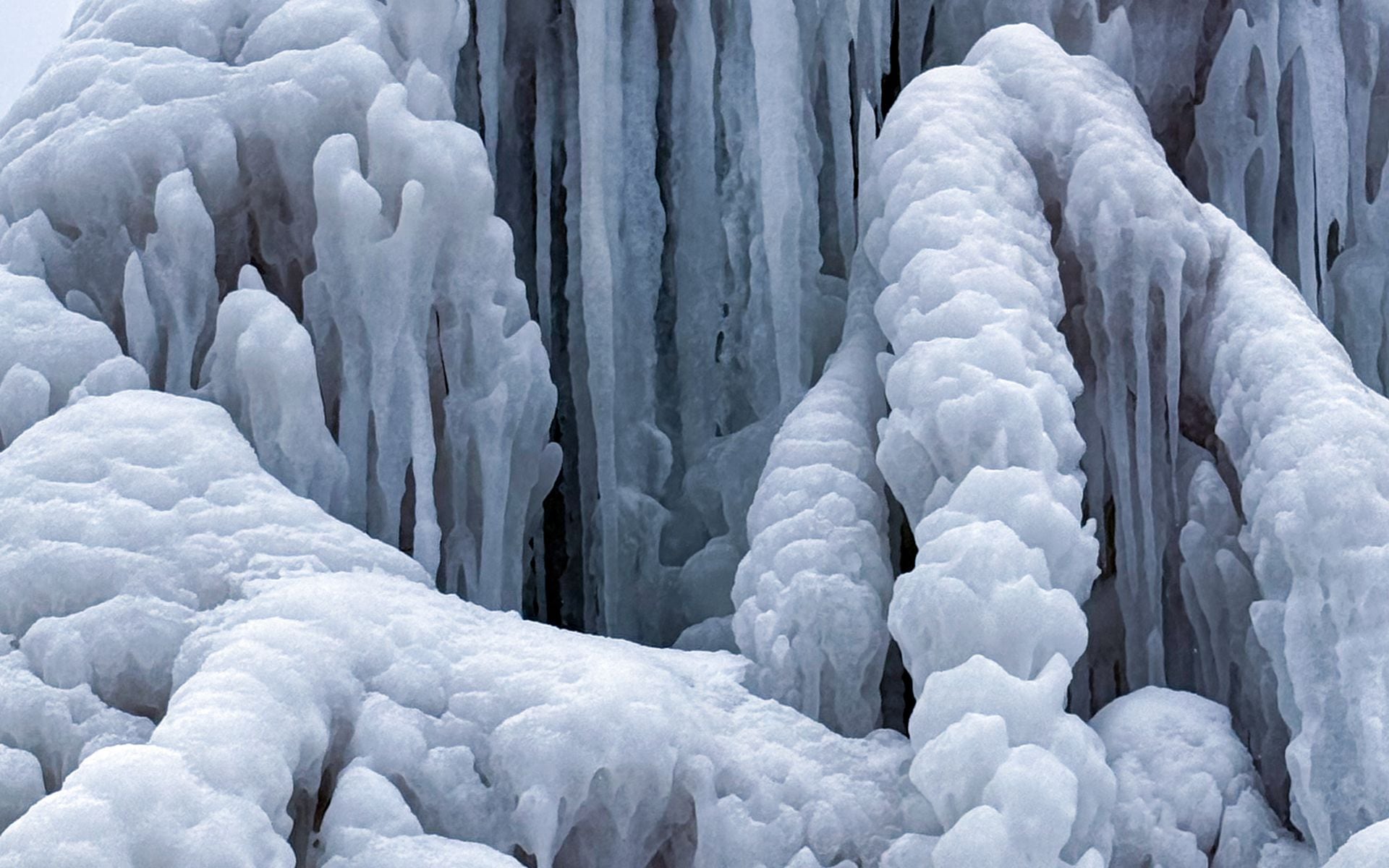
The draw is the limestone cliff face. Lake Michigan waves have carved sea caves and arches into the bluff over thousands of years, and in January and February, the spray and surge of the open lake coats the cliff faces in ice formations that build up over successive cold snaps. It’s not the Apostle Islands ice caves experience, which requires traveling to Bayfield and hiking or skiing across Lake Superior ice. Cave Point delivers something quieter: accessible shoreline ice on the Lake Michigan side, no crowds, no admission, and a walk of under a quarter mile from the parking area to the overlooks.
The limestone shelves near the water can get slippery, so wear boots with real traction. Lake Michigan runs near freezing in winter and the waves still come in with force; stay well back from the water’s edge. Early morning on a clear, cold day is the best time, when overnight ice is fresh and the light is good.
Winter Dining on the Peninsula
The fish boil restaurants that run from late spring through fall are mostly closed in winter. A few indoor versions appear occasionally, but winter is not fish boil season on the Door Peninsula. If the fish boil is specifically what you’re coming for, plan a warmer-month trip; the Door County fish boil guide covers which restaurants run them and when.
For year-round dining, Sturgeon Bay has the most choices. Downtown Sturgeon Bay has craft beer spots, casual restaurants, and a few places that run full dinner service through the cold months. Up the peninsula, some Fish Creek restaurants stay open through winter on reduced hours, typically Thursday through Sunday or weekend-only. Call ahead before planning a dinner around a specific spot; winter hours on the Door Peninsula shift more than at any other time of year, and a restaurant that was open last January may not be this one.
The broader Wisconsin supper club tradition extends to some of the year-round restaurants and taverns in the Sturgeon Bay area. The Wisconsin supper club experience is less about a specific dish than about the setting and the pacing, and some of the spots near the southern end of the peninsula hold their own with the better-known supper clubs elsewhere in the state.
Lodging: Cheaper Rates, Fewer Properties
Summer rates at Door County inns and bed-and-breakfasts run high, particularly from mid-June through Labor Day weekend. Winter rates come down substantially. Properties that charge $200 to $350 per night in peak summer often drop to $100 to $150 in January, sometimes lower. The tradeoff is selection: many smaller properties close for part of the off-season, and you’ll need to verify availability directly rather than assuming a place you saw on a travel site is open.
Sturgeon Bay has the most reliable year-round lodging inventory, including several chain hotels and locally owned properties near the downtown and canal area. Fish Creek and Egg Harbor have a smaller number of year-round inns and rental cottages. For a broader view of where to stay across the Door County and Bay region, and how to compare it with other parts of Wisconsin, the where to stay in Wisconsin guide breaks down the options by region.
If you’re still working out how long a Door County winter trip actually warrants, how many days in Door County walks through what a 2, 3, or 4-day itinerary looks like and how to allocate your time across the peninsula.
When to Go, How to Get There, and What to Bring
The clearest window for a winter Door County trip is late January through mid-February. By then, holiday traffic has cleared, prices are at their lowest, and if Lake Michigan is going to produce ice formations at Cave Point, this is when it happens. December has a different feel: some villages put up lights, a handful of businesses hold holiday events, and more establishments are open than they will be in January. But December is also the last stretch of fall-to-winter transition and doesn’t deliver the same true-winter conditions you’d find in January.
March is the late end of winter on the peninsula. Some businesses start to come back online for the season as early as mid-March, and it can feel more transitional than either winter or spring. If you want full winter quiet and the best chance at ice formations, January and early February are your window.
Getting there requires a car. Door County sits at the end of a peninsula with no commercial air service and no public transit. Milwaukee to Sturgeon Bay runs about 2.5 to 3 hours via I-43 North and Highway 57. From Chicago, plan 3.5 to 4 hours depending on traffic on I-41 and I-43. From Madison, take US-151 East to US-41 to Highway 57, roughly 3.5 hours. For a full breakdown of airport options and ground transport across the state, Wisconsin airports and getting there covers the main gateways.
What to bring: waterproof winter boots with ankle support and real grip (the ship canal piers, Cave Point, and icy park trails all involve uneven footing), wind-blocking layers for the exposed shoreline (Green Bay and Lake Michigan winds in January can stop you cold), hand warmers for time outdoors at Cave Point or on the piers, and traction devices such as Yaktrax if you plan serious time on icy trails. The best time to visit Wisconsin covers the seasonal tradeoffs across the whole state if you’re still weighing a winter trip against other seasons.
Photo credit: Tony Webster from Minneapolis, Minnesota / CC BY-SA 2.0