The Apostle Islands ice caves form only in winters cold enough to freeze Lake Superior solid, which doesn’t happen every year. Here is how to read the conditions, plan your timing, and what to do if the lake doesn’t cooperate.
The Short Answer on Timing
Late January through mid-February is the window when the Apostle Islands ice caves are most likely to be accessible, but only in years when Lake Superior freezes solid enough to walk on, which is not every winter. When conditions align, the National Park Service opens a marked walking route from Meyers Beach across the ice to the mainland sandstone caves, a walk of roughly 0.5 to 1 mile each way. When conditions don’t align, there is no walking access and no caves. Plan accordingly: do not book a hotel and drive four or five hours without confirming conditions that same morning.
The official source is apostleislands.nps.gov, where the Apostle Islands National Lakeshore park staff post ice thickness readings and cave-access status updates throughout the winter. You can also call the visitor center at (715) 779-3397. When the caves open, word spreads fast, and crowds follow within days. In 2014, after a five-year closure, more than 100,000 people visited Meyers Beach over roughly six weeks, a staggering number for a remote stretch of WI-13 in the Wisconsin Northwoods. Come on a weekday if you can, and plan to arrive before 9 a.m. on weekends.
Why Lake Superior Doesn’t Freeze Every Year
Lake Superior is the largest freshwater lake in the world by surface area, and its thermal mass makes it slow to cool and slow to freeze. For the Meyers Beach walking route to open, the National Park Service requires at least 10 inches of solid, clear ice, not layered ice, not slushy refrozen sections, but a continuous column of clear lake ice. Getting there means weeks of overnight temperatures in the negative double digits, typically well below -15°F for an extended stretch. A week of cold followed by a January thaw can reset the process entirely.
Some winters produce spectacular formations. Others produce nothing. In recent decades, the reliable access years have included 2014 and 2019, while many other winters saw the caves partially forming or not forming at all. If you’re planning a trip specifically for the ice caves, build flexibility into your dates and have a backup plan. The Bayfield area is worth the drive in winter even without the caves: the town is quiet, the views over Lake Superior are remarkable, and the apple orchards on the hillside above town make for a peaceful cold-weather walk. For a broader look at when Wisconsin rewards a visit, the Wisconsin travel calendar covers every season across the state.
Where the Ice Caves Are and How to Get There
The mainland ice caves sit on the shoreline of the Apostle Islands National Lakeshore’s mainland unit, accessed from Meyers Beach. From Bayfield, take WI-13 north about 12 to 13 miles through the small town of Cornucopia, then turn left on Meyers Beach Road. The parking area is at road’s end. From Madison, plan on 4.5 to 5 hours north. From Minneapolis-St. Paul, the drive runs about 3 hours east. The nearest commercial airports are Duluth International (DLH) in Minnesota, about 1.5 hours west, and the smaller Ashland/Iron River area fields; most visitors drive in from farther south.
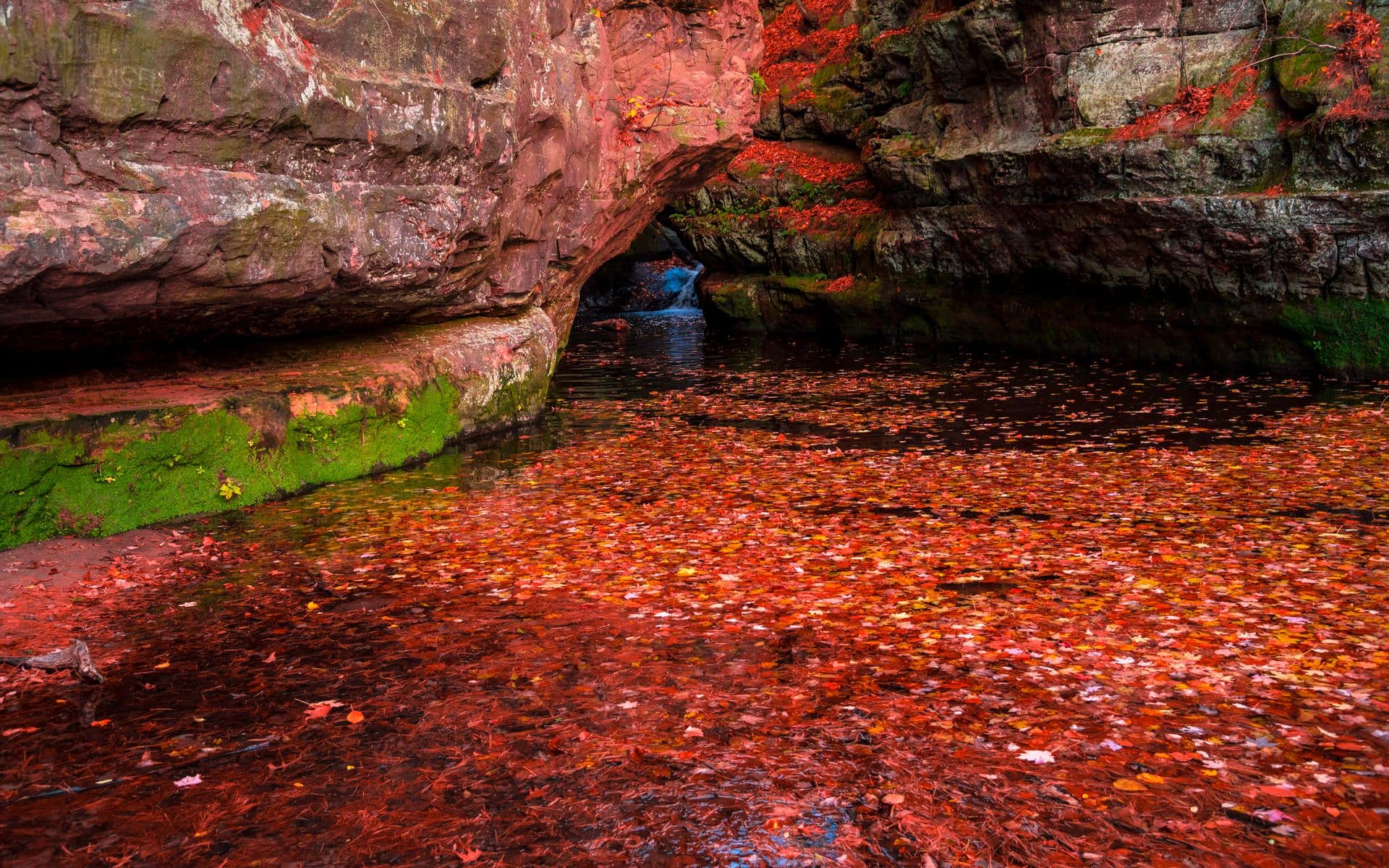
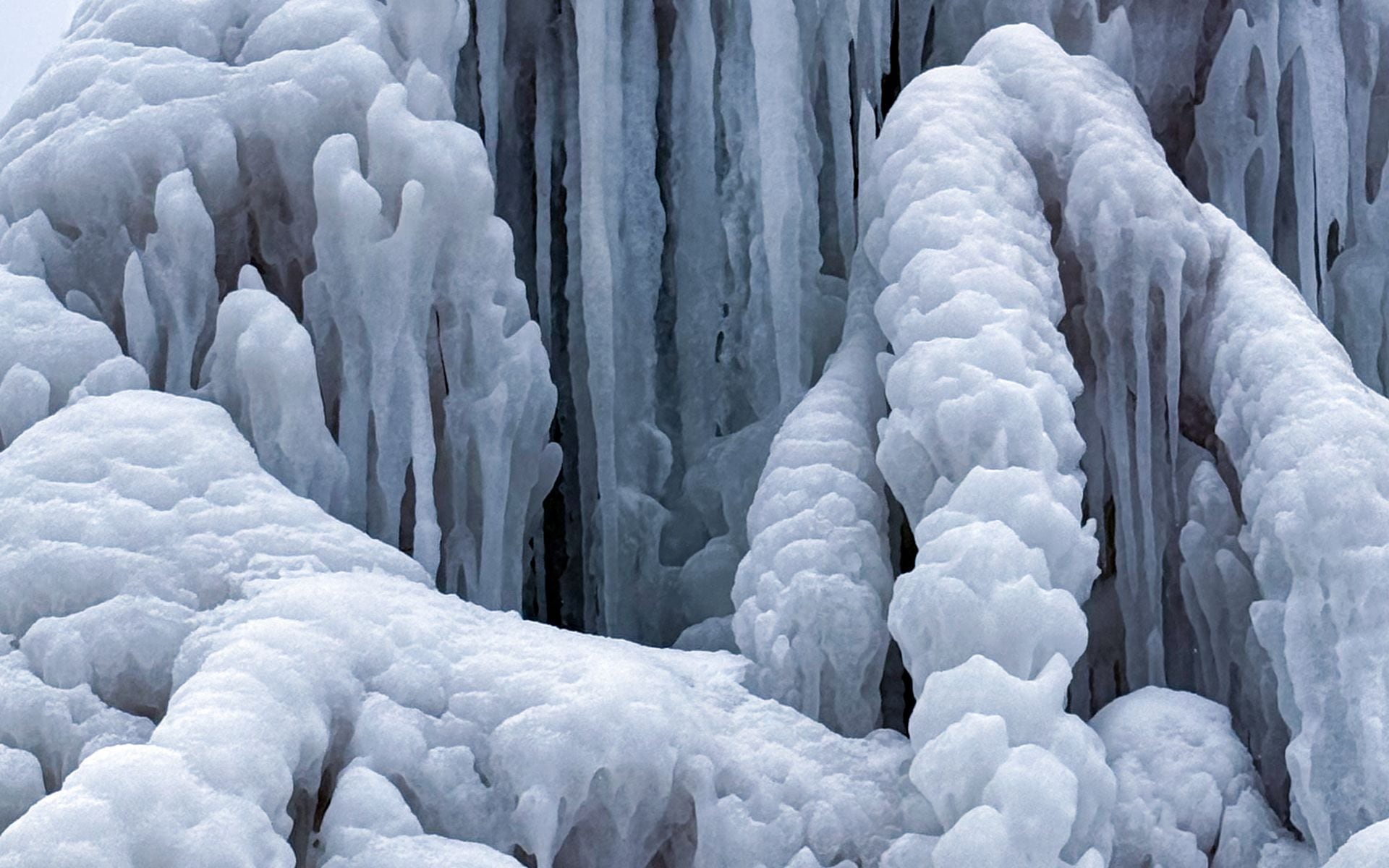
When the walking route is open, the NPS marks it with flags and posts rangers at the beach. Do not walk beyond the marked route, unmarked ice across the open lake is a different situation entirely, and the park service monitors ice closely before opening or closing the path. The caves themselves are sandstone formations carved by centuries of wave action. In winter, cold air seeping through cracks in the rock face causes water to freeze into columns, curtains, and what look like chandeliers draped from the cave ceiling. The colors run from white and pale blue to deep amber where the sandstone is tinted with iron. Entry to the National Lakeshore is free.
What to Wear and Bring
Getting this wrong makes the walk genuinely miserable and potentially dangerous. The lake surface at Meyers Beach is smooth, polished ice, crampons or ice cleats are not optional. Bring them from home or pick them up before you arrive, because there is no gear shop at the trailhead. Inexpensive screw-in or strap-on ice cleats work fine and run about $15 to $40 (estimate); serious trail crampons are better but not required for the flat lake surface.
Dress for -20°F windchill or colder. On the open lake there is nothing to break the wind, and the exposed sandstone caves channel it further. Wear a moisture-wicking base layer, a mid layer of fleece or down, and a windproof and waterproof outer shell. Insulated waterproof boots rated to at least -20°F perform much better than standard winter boots. Bring hand warmers and tuck several into your gloves and boots before you start. A full face covering or balaclava is worth the extra bulk. Sunglasses or ski goggles cut the glare off the ice, which is substantial on clear days.
One detail most people don’t think about: cold kills phone batteries fast. Keep your phone inside a chest pocket or inside your base layer until you want to use it. A dead phone on the lake is not just inconvenient, it’s a safety issue if conditions change. Carry water and snacks inside your coat layers to keep them from freezing. The walk to the caves and back is rarely more than 2 miles total, but at -10°F with windchill it takes more out of you than a summer hike of the same length.
If the Ice Caves Aren’t Open: The Summer Alternative
From May through October, Meyers Beach is the launch point for kayak tours of the same sandstone caves. The formations that hold ice in winter are carved into the rock year-round, and the sandstone colors, ranging from amber to rust to deep ochre, read differently in summer light than they do under winter ice. Trek & Trail - Apostle Islands Sea Kayaking runs guided paddles from Meyers Beach into the mainland caves and along the dramatic sea cliff sections of the shore. Apostle Islands Sea Kayaking - Lost Creek Adventures, operating from near Cornucopia, offers similar sea cave tours with small group sizes that let you spend time in the caves rather than rushing through. Guided tours typically run $55 to $95 per person depending on duration (estimate). Both operators provide kayaks and safety gear; no prior paddling experience is required for the cave tours.
Apostle Islands Cruises, departing from the Bayfield town dock, runs boat tours that circle the mainland caves and sail past several of the 21 islands in the national lakeshore. The boat tours don’t go inside the caves but provide a view of the sandstone bluffs and caves from the water, and they’re a good option for visitors who aren’t comfortable paddling or who want a more relaxed way to see the coast. Summer tour departures typically run May through October; check the operator’s schedule for timing.
The summer experience at the Apostle Islands is different from winter but not lesser. The islands are accessible by private boat or organized tour, the kayaking is among the best on any freshwater in the country, and Bayfield in July is one of the more pleasant small towns in Wisconsin. If you’re building a longer northern Wisconsin trip, the ice caves post pairs well with a stop at a Friday night fish fry in Bayfield or a weekend in Door County, where the Door County fish boil is the defining meal of that part of the state. Both coasts are worth knowing. For a trip centered on a different kind of Wisconsin, waterparks, family rides, and the Wisconsin River gorge, the notes on whether Wisconsin Dells is worth visiting give an honest rundown on that very different corner of the state.
The full Wisconsin Travel Guide covers the state from the Driftless bluffs in the southwest to the Lake Superior shore up here, and it’s a good place to work out how the Apostle Islands fit into a broader trip.
Frequently asked questions
Do the Apostle Islands ice caves open every year?
No. The mainland caves at Meyers Beach only become accessible when Lake Superior freezes to at least 10 inches of solid ice, which requires weeks of sustained temperatures well below zero. Some winters see no access at all. Recent years with notable cave access include 2014 and 2019, but many winters since have not produced walkable ice. Always check apostleislands.nps.gov or call (715) 779-3397 before making the drive.
What months are the Apostle Islands ice caves typically open?
In years when the ice is thick enough, the caves most often become accessible in late January and remain open through mid-February or into early March. The window can be shorter, a week or two, or occasionally longer depending on how quickly the weather turns. The caves can also close mid-season if a warm spell thins the ice, then reopen if cold returns.
How far is Meyers Beach from Bayfield?
About 12 to 13 miles north on WI-13, passing through Cornucopia, then left on Meyers Beach Road to the parking area. Plan on 20 to 25 minutes from Bayfield. Gas up in Bayfield or Cornucopia before you go, there is nothing at Meyers Beach.
Can you drive onto the ice to reach the caves?
No. Access is on foot only from the Meyers Beach parking area. When the route is open, the National Park Service marks it with flags. The walk is roughly 0.5 to 1 mile each way across the lake surface. Do not walk off the marked route, the open lake beyond is a different and unmonitored ice situation.
What should I bring to visit the Apostle Islands ice caves?
Crampons or ice cleats are essential, the lake surface has no grip. Dress for -20°F windchill: moisture-wicking base layer, insulating mid layer, windproof outer shell, and insulated waterproof boots. Bring hand warmers, a face covering, and sunglasses for the glare. Keep your phone inside your layers to preserve the battery in the cold. Carry water and snacks inside your coat.