What to Expect
Milwaukee doesn't try to be anything other than Milwaukee. The downtown is compact and walkable, with the Milwaukee River threading through the center before it meets Lake Michigan at the Summerfest grounds. The Historic Third Ward, directly south of downtown, holds the Milwaukee Public Market, a cluster of brick warehouses turned into restaurants and boutiques, and the Milwaukee Art Museum at the water's edge. Farther south, Walker's Point has the highest concentration of bars and restaurants in the city. Locals don't dress up to go out, and they expect you won't either.
The city runs on a few deep loyalties: the Green Bay Packers, Friday night fish fry, and the brandy old fashioned. The brandy old fashioned is Wisconsin's drink, and ordering one here tells the bartender you know what you're doing. For the broader picture of the Lake Michigan shore, from the Kenosha waterfront up through Sheboygan, Kohler, and Cedarburg, read the Milwaukee & Lake Michigan region guide.
What to Do There
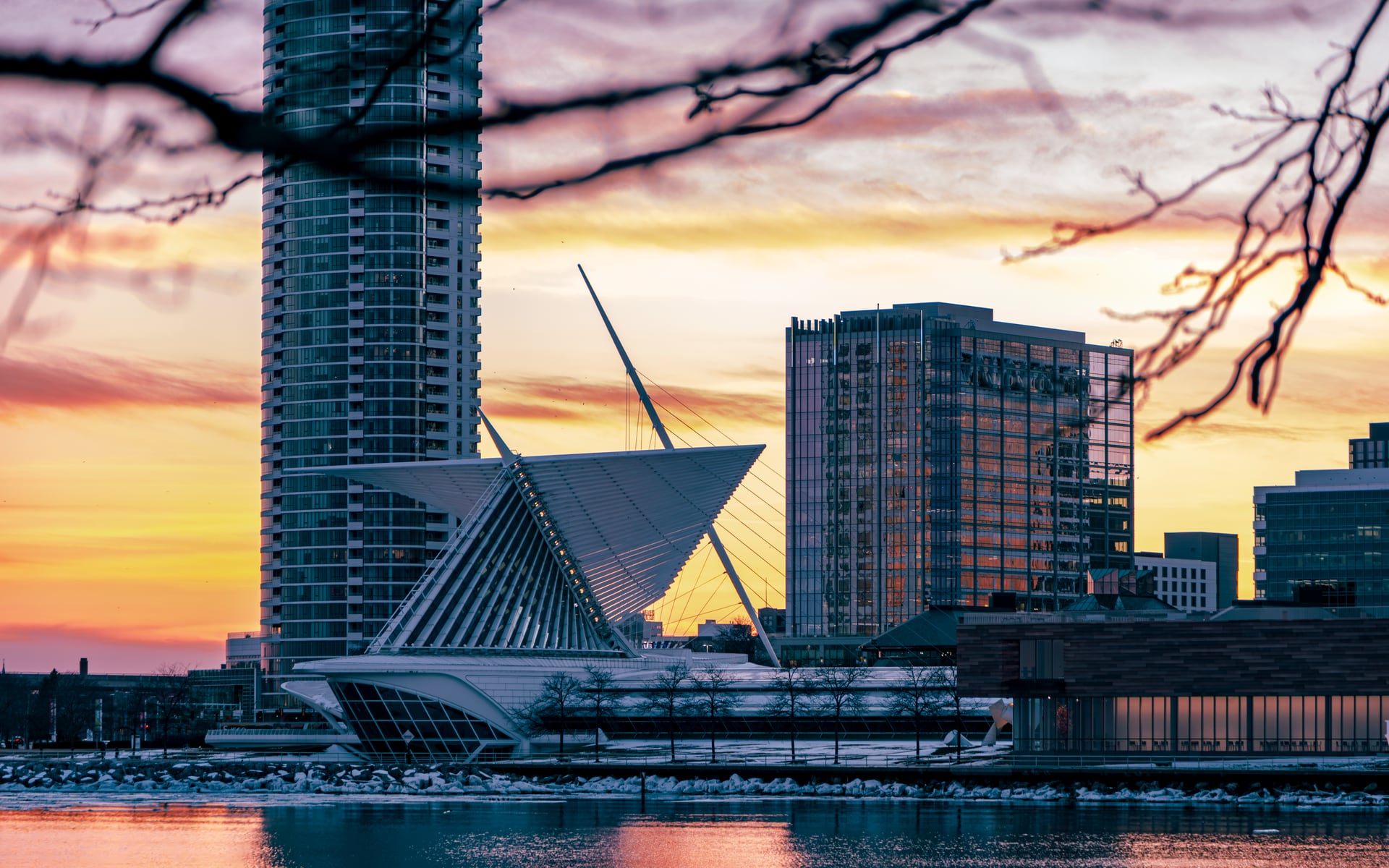
The Milwaukee Art Museum (700 N. Art Museum Drive) is the city's signature building. Santiago Calatrava's addition, a white steel structure with moveable brise-soleil wings that open and close over the lakefront each morning and afternoon, launched in 2001 and remains one of the most photographed structures in the Midwest. The museum holds a permanent collection of more than 30,000 works. Adult admission runs around $26; give yourself two to three hours at minimum, and budget another 30 minutes just to walk the lakefront outside.
The Harley-Davidson Museum (400 W. Canal St.) is a 20-acre campus on the Menomonee River, about a 15-minute walk southwest of downtown, dedicated to the company founded in Milwaukee in 1903. The exhibits trace the motorcycle from the very first machines built in a shed on 38th Street through to modern production. Admission runs about $25 for adults. The building is worth a look even if motorcycles aren't your thing.
Breweries are a practical matter in Milwaukee. Lakefront Brewery (1872 N. Commerce St.) runs tours of its 1890s-era powerhouse building on the Milwaukee River seven days a week, with beer, polka, and a crowd that mixes tourists and regulars on Friday nights. Tours cost around $15 per person and include samples. Sprecher Brewing Company (701 W. Glendale Ave., Glendale, five minutes north) has been making craft beer and its famous root beer since 1985; the tour and tasting runs about $8. The old Miller Brewery on State Street offers free tours of a production facility that has run in this neighborhood since 1855.
The Historic Third Ward is the most reliable evening stretch. The Milwaukee Public Market (400 N. Water St.) operates Tuesday through Sunday and concentrates local vendors inside a renovated 1904 building. St. Paul Fish Company, located inside the market, sells Lake Michigan whitefish and perch caught fresh from the lake. Walk south on Broadway for dinner, then loop north along the Milwaukee RiverWalk back downtown. The paved RiverWalk runs about three miles along the river from the lakefront through downtown and into the Beerline neighborhood.
Where to Stay
The Pfister Hotel (424 E. Wisconsin Ave.) has been Milwaukee's landmark downtown address since 1893. It carries an extensive Victorian art collection through its public spaces, and the rooftop Blu Bar on the 23rd floor has views across the lake. Rooms typically run $200 to $350 per night depending on the season. The Kimpton Journeyman Hotel (310 E. Chicago St.), in the heart of the Third Ward, is a 133-room boutique property with a contemporary design and easy access to the neighborhood's walkable stretch. The Iron Horse Hotel (500 W. Florida St.) in Walker's Point was built into a 1907 warehouse and caters to the motorcycle crowd, with bike parking out front and a bar that runs late on weekends.
County Clare Irish Inn & Pub (1234 N. Astor St.) is a 29-room property with an attached Irish pub in the Astor Hill neighborhood, about a ten-minute walk from downtown, and rates tend to run lower than the core hotels at roughly $130 to $180 per night. Saint Kate - The Arts Hotel (139 E. Kilbourn Ave.) integrates working art galleries and performance spaces throughout the building for travelers who want something beyond a standard room.
For dining, Sobelmans on St. Paul (1900 W. St. Paul Ave.) does the Friday fish fry without ceremony, with fried cod and old fashioneds at no-nonsense prices. The wider tradition of fish fry and supper clubs that defines Wisconsin dining is covered in the Best Supper Clubs in Wisconsin guide.
Getting There and Access
Milwaukee Mitchell International Airport (MKE) sits 8 miles south of downtown, a 15- to 20-minute drive with light traffic. Most major US carriers serve the airport. If you're coming from Chicago, Amtrak's Hiawatha service runs from Chicago Union Station to Milwaukee's Intermodal Station in about 90 minutes, with several departures daily; tickets typically run $25 to $50 each way. Driving from Chicago takes 90 to 100 minutes via I-94 under normal conditions.
Parking downtown is practical, with metered street parking and several city-operated ramps near the Third Ward and the arts museum. The Bublr Bikes bikeshare system covers the Third Ward, the lakefront path, and the core of downtown, with docking stations about every few blocks. Rideshare coverage in Milwaukee is reliable.
Best Time to Go
June through September is the main window. Summerfest, held over 11 days starting the last Thursday of June at Henry Maier Festival Park on the lakefront, is the largest music festival in the United States by attendance and draws artists to 11 stages. A daily ticket runs roughly $30 to $40 depending on the headliner lineup; multi-day passes reduce the per-day cost. The same lakefront grounds host a run of ethnic and cultural festivals through July and August, including Festa Italiana in mid-July and German Fest at the end of July.
July and August are warm and humid, with highs regularly in the low-to-mid 80s Fahrenheit. Bradford Beach, at 2400 N. Lincoln Memorial Drive, runs a lifeguard service from late June through Labor Day weekend, though Lake Michigan water temperatures rarely exceed 70F even in August. October cools quickly but stays pleasant through mid-month, and the Brewers and Bucks seasons overlap the shoulder season.
Winters are genuinely cold: January highs average around 27F, with lake-effect snow that can hit the city hard off Lake Michigan. The indoor music scene stays active and restaurants are never more local-feeling than on a February night. For nearby weekend options once you're done with the city, Lake Geneva is about 60 miles south on I-43 and US-12, roughly an hour in clear traffic, and Elkhart Lake is 60 miles north on I-43, also about an hour.
Good to Know
The lakefront path runs from the harbor south to Bradford Beach, about 3 miles, and is free to walk or bike. For a Brewers game at American Family Field (1 Brewers Way), note that the stadium is on the northwest side of the city, about 6 miles from downtown and not walkable from the center. Plan to drive or take a rideshare, and book parking ahead of time for weekend day games.
Milwaukee's sales tax is 5.5 percent on goods. The city and county add hotel room taxes on top, so budget roughly 16 to 18 percent total in taxes on hotel rates. Tipping follows standard US practice: $1 to $2 per drink at the bar, 18 to 20 percent at sit-down restaurants.
Frequently asked questions
How far is Milwaukee from Chicago?
Milwaukee is about 90 miles north of Chicago via I-94, roughly 90 to 100 minutes by car under normal traffic. Amtrak's Hiawatha train makes the run in about 90 minutes from Chicago Union Station with several departures per day, and tickets typically cost $25 to $50 each way.
What is Milwaukee most known for?
Milwaukee is known for beer (the old Miller, Pabst, and Schlitz breweries, plus newer spots like Lakefront Brewery and Sprecher), the Harley-Davidson Museum, the Milwaukee Art Museum's Calatrava building on the lakefront, and Summerfest, which claims the title of the world's largest music festival. The city's Friday night fish fry and the brandy old fashioned are the defining local food and drink traditions.
When is Summerfest in Milwaukee?
Summerfest runs for 11 days starting on the last Thursday of June at Henry Maier Festival Park on the Lake Michigan lakefront. Daily admission typically runs $30 to $40 depending on the night's headliner. The festival grounds are walkable from the Historic Third Ward and downtown, about a half-mile south along the lakefront path.
What is the best neighborhood to stay in Milwaukee?
Downtown and the Historic Third Ward put you within walking distance of the Milwaukee Art Museum, the RiverWalk, and the Public Market. Walker's Point is the most active bar and restaurant neighborhood and is a short rideshare from the Harley-Davidson Museum. If you're on a tighter budget, County Clare Irish Inn in Astor Hill is about ten minutes on foot from downtown and consistently rates well.